
Laser Wood Restoration: How It Works and What It's Best For
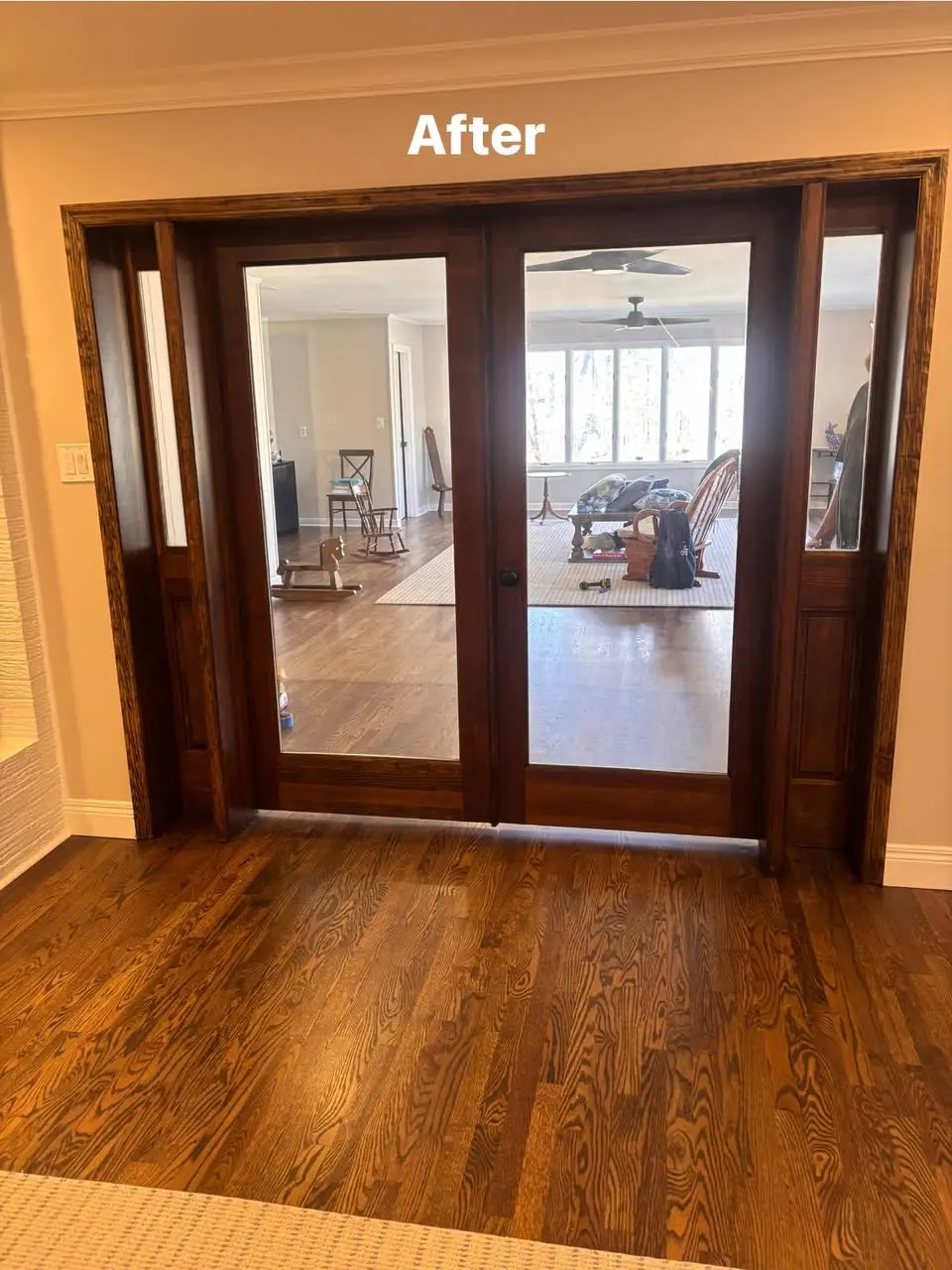
Most stripping methods remove finish by brute force — chemical strippers that eat through coatings, or sanding that grinds the surface down. Laser restoration works differently: it uses focused light to vaporize the old finish layer by layer, leaving the wood underneath untouched.
How Laser Restoration Works
A laser beam is passed over the surface, and the finish or coating absorbs the light energy and burns off as vapor. Because the laser can be tuned to the exact energy level that removes finish without damaging the material underneath, it stops at the wood instead of cutting into it. That precision is what makes it useful on surfaces that sanding and chemical strippers tend to ruin: carved details, inlays, veneers, and old finishes layered with paint or varnish.
There's no chemical stripper to apply, neutralize, and dispose of, and no sanding dust filling the room. The process is dry and largely self-contained, which is also why it works indoors on furniture and architectural pieces that would otherwise need to be stripped outside or in a shop.
What It's Used For
Denton's uses laser restoration on:
- Wood — furniture, doors, trim, and architectural details with fine carving or inlay work
- Metal — hardware, fixtures, and metal components with old paint or corrosion
- Concrete — surfaces with coatings, stains, or buildup that would be difficult to strip chemically
It's a strong fit any time the piece has detail worth preserving, or when chemical stripping isn't practical — a door frame that can't be removed, furniture with intricate carving, or hardware you don't want to risk damaging.
Real Results
Chris Virden, a furniture restorer in Tennessee, described using the service on a piece he'd normally have passed on: "I had seen videos of laser stripping and had my doubts. So I bought a piece of furniture I normally would have passed on because it would have taken too long to restore. They removed everything in four hours!! Hard to reach areas I normally might have passed on — stripped to bare wood. It was ready the next day!"
Stripped to bare wood in about four hours, ready to stain and finish the next day — work that hand sanding or chemical stripping would have taken considerably longer to do, especially in the tight, detailed areas he mentioned.
Laser Restoration vs. Sanding or Chemical Stripping
- Removes wood — Laser: no. Sanding: yes. Chemical stripping: no.
- Dust or fumes — Laser: none. Sanding: dust. Chemical stripping: fumes and chemical waste to dispose of.
- Detail preservation — Laser: high, even on carving and inlay. Sanding: poor on detailed areas. Chemical stripping: moderate.
- Works on metal & concrete — Laser: yes. Sanding and chemical stripping: limited.
Is Laser Restoration Right for Your Project?
If you restore and resell furniture, laser restoration opens up pieces you might otherwise pass on because hand-stripping intricate detail takes too long to be worth it. If you're a homeowner with a door, trim, or fixture that's been painted or varnished over original wood or metal, it's a way to recover the original material without sanding through it.
See laser restoration services and request a quote, or book a free consultation to talk through your specific piece.