
Gaps in Hardwood Floors in Winter: Normal or Not?
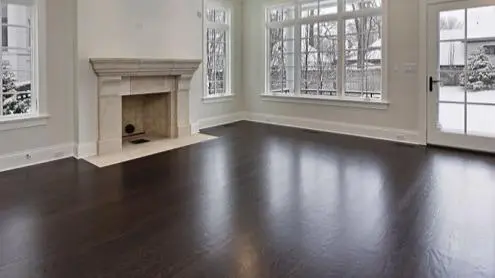
Gaps that appear once the heat is running and close again when the weather turns humid are usually normal. NWFA treats seasonal gaps that come and go as expected behavior. Large gaps, or gaps that stay open through the humid months, are worth a professional look.
Why the gaps appear
Wood takes on and gives off moisture with the air around it. Heating a house lowers the indoor relative humidity, so the boards dry and shrink, mostly across their width. The small change in each board shows up as a line between boards.
It can be puzzling in Knoxville, because winter air outside is not especially dry in relative terms. NOAA records for Knoxville from 1948 to 2018 show winter outdoor relative humidity averaging about 81% in the early morning and 62% in the afternoon. The dryness your floor feels comes from heating that cold air indoors.
How much movement to expect
A wider board gives a wider gap for the same change in moisture. As an example worked from the USDA Wood Handbook figures, a 5-inch flat-sawn solid red oak board that loses 3% moisture content narrows by about 0.046 inch. White oak moves a bit more. We compare the two in white oak vs red oak.
What to do about them
- Measure first. An inexpensive hygrometer shows the humidity in the room. Our floor care kit includes one.
- Hold a steady range. NWFA's homeowner's handbook recommends 60 to 80°F and 30 to 50% relative humidity all year. Check your flooring maker's care instructions too.
- Add moisture in heating season. A humidifier helps limit shrinking. In summer, air conditioning or a dehumidifier helps limit swelling.
- Change things gradually. Avoid sudden swings in humidity.
For room-by-room habits, see hardwood floor humidity control.
Should you fill the gaps?
Not seasonal ones. The boards will swell again, and filler in the joint has nowhere to go. NWFA's technical staff warn in Hardwood Floors magazine that filling them can permanently damage the flooring.
Signs it is more than the season
- Gaps that do not close when humidity returns
- Gaps that are large or still growing
- Boards that are cupped, with raised edges. Some engineered floors can cup this way when they dry out
- Boards that move or feel loose underfoot
- Any sign of a leak, damp subfloor or standing water
Water problems come first. Find and stop the source before anyone works on the floor, and read about water damage and hardwood floors.
Get it checked
If gaps stay open through the humid months, or you see any of the other signs above now, book a consultation. Depending on the cause, the answer may be humidity control or board repair.